Precision CNC Machining for Industrial Components
From prototype machining to full-scale production, we provide reliable CNC machining services with tight tolerance control, consistent quality, and stable lead times for industrial applications.
- Multi-axis CNC milling and turning for complex parts
- Tight tolerances with optional secondary machining
- Flexible volumes from prototypes to mass production
CNC Machining Capabilities
We offer comprehensive CNC machining solutions to support precision manufacturing across a wide range of industries.
CNC Turning
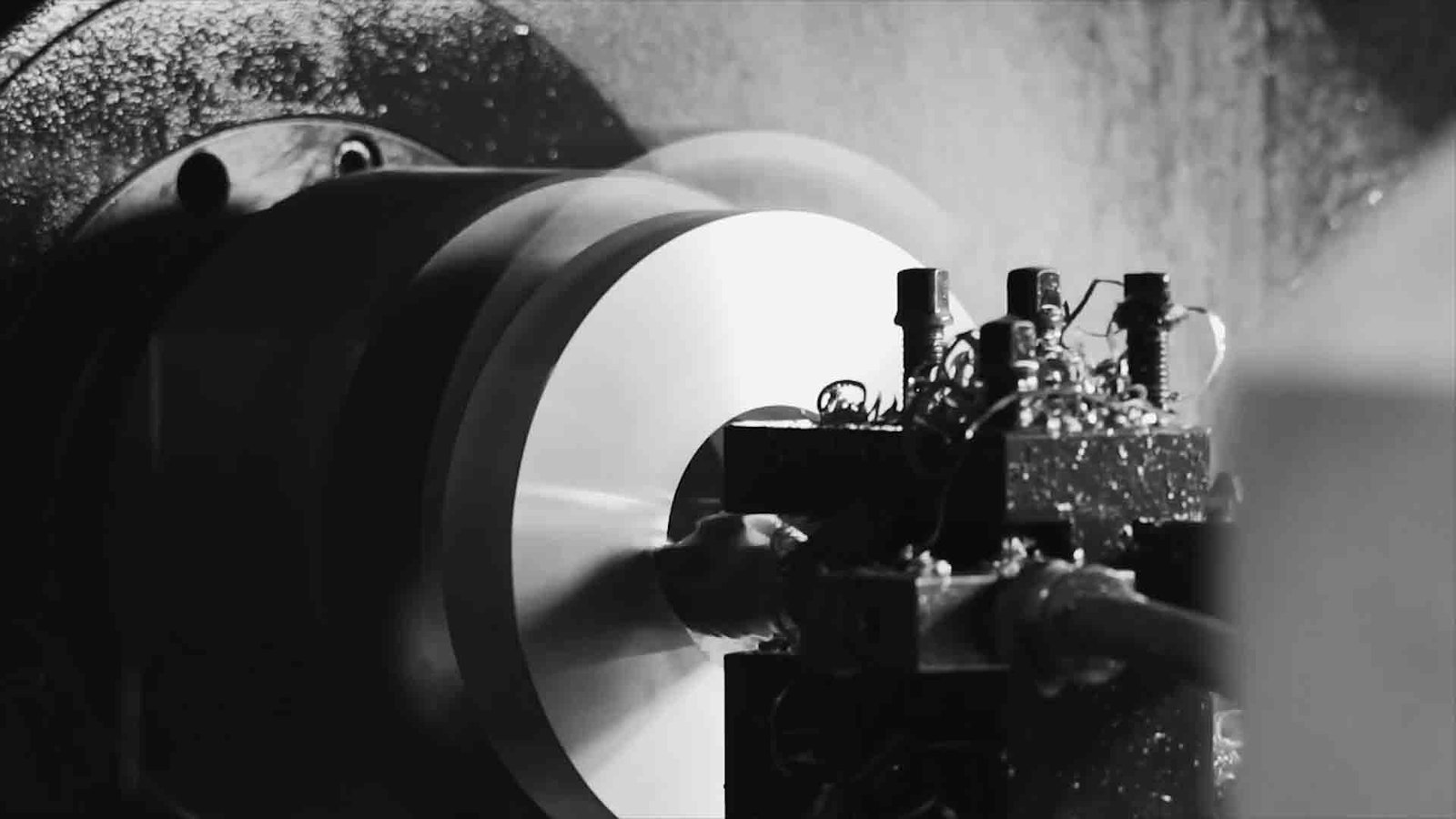
CNC turning is ideal for producing round and rotational components with high dimensional consistency. Using precision lathes and turn-mill centers, we machine shafts, bushings, flanges, and cylindrical parts with excellent concentricity and surface finish.
- Rotational and axis-symmetric components
- Tight tolerance diameters and grooves
- Medium to high-volume production
CNC Milling
CNC milling enables precise material removal across multiple axes to create complex shapes, slots, contours, and mounting features. With advanced 3-axis, 4-axis, and 5-axis machining centers, we support high-accuracy parts with complex geometries and minimal setup error.
- Complex geometries and multi-face machining
- Tight tolerance structural components
- Prototypes to mass production
Swiss Machining
CNC Swiss machining is designed for ultra-precision, small-diameter components requiring exceptional accuracy and repeatability. Continuous material support and multi-tool operations enable efficient production of long, slender, and intricate parts.
- Ultra-precision small-diameter components
- Excellent repeatability and concentric accuracy
- Efficient production of complex slender parts
CNC Machining Materials & Finishes
We machine a wide range of metal and engineering plastic materials to meet different application requirements.
Carbon Steel
Carbon steel is widely used in CNC machining due to its balanced strength, machinability, and cost efficiency. Different carbon grades allow flexibility between hardness, toughness, and wear resistance, making it suitable for structural and mechanical components.
Common Grades:
1010, 1020, 1045, 1060, 1080
Typical Applications:
Shafts, brackets, machine frames, industrial components
Stainless Steel
Stainless steel offers excellent corrosion resistance, strength, and durability for demanding environments. It is ideal for precision CNC machining where surface finish and long-term reliability are critical.
Common Grades:
304, 316, 17-4PH, 410, 2205
Typical Applications:
Medical parts, food equipment, valves, structural components
Aluminum Alloy
Aluminum alloys provide lightweight strength, high machinability, and excellent thermal conductivity. They are well suited for complex CNC machined parts requiring tight tolerances and fast production cycles.
Common Grades:
A357, A380, A443, A514
Typical Applications:
Automotive parts, housings, aerospace components
Super Alloys
Super alloys are designed for extreme environments involving high temperature, pressure, and corrosion. CNC machining of these materials requires advanced tooling and process control.
Common Grades:
Inconel 625, Inconel 718, Hastelloy X
Typical Applications:
Aerospace, energy, high-performance industrial systems
ABS
ABS is a versatile engineering plastic known for its impact resistance, dimensional stability, and ease of machining. It is commonly used for functional prototypes and production parts.
Typical Applications:
Housings, enclosures, automotive interior parts
Nylon (PA)
Nylon offers excellent wear resistance and mechanical strength, making it suitable for moving parts and load-bearing components.
Typical Applications:
Gears, bushings, mechanical components
POM (Acetal)
POM provides high stiffness, low friction, and excellent dimensional accuracy, ideal for precision CNC machining.
Typical Applications:
Precision gears, bearings, sliding components
PTFE
PTFE features outstanding chemical resistance and low friction properties, suitable for demanding industrial environments.
Typical Applications:
Seals, insulators, chemical processing parts
Machined Finish
Direct CNC machined surface with visible tool marks. Ideal for functional parts where tight tolerances and dimensional accuracy are the priority.
Features:
High dimensional precision
No additional processing required
Cost-effective for functional components
Shot Blasting / Sand Blasting
Mechanical surface treatment used to remove burrs, sharp edges, and minor surface defects, resulting in a uniform matte finish.
Features:
Improved surface consistency
Enhanced paint or coating adhesion
Common pre-treatment for coatings
Polishing
Mechanical or manual polishing to achieve a smooth or mirror-like surface finish, improving both aesthetics and cleanliness.
Features:
Reduced surface roughness
Improved appearance and cleanliness
Suitable for stainless steel and aluminum
Anodizing (Aluminum)
Electrochemical process that increases corrosion resistance and surface hardness while allowing color customization.
Features:
Excellent corrosion resistance
Decorative and functional finishes
Available in clear, black, and custom colors
Plating
Electroplated metal coatings applied to improve corrosion resistance, wear resistance, or electrical conductivity.
Available Options:
Zinc plating
Nickel plating
Chrome plating
Powder Coating
Durable dry coating applied for long-lasting protection and uniform appearance.
Features:
Excellent wear and corrosion resistance
Environmentally friendly process
Wide range of colors and textures
Custom Material & Surface Finishing Support
If your project requires a specific surface roughness, coating thickness, or special post-processing standard, our engineers can recommend the most suitable finishing solution based on your application and performance requirements.
Advantages of RPA CNC Machining
Advanced CNC Equipment
Modern 3-axis, 4-axis, and 5-axis CNC machining centers
Suitable for both rapid prototyping and stable volume production
Consistent Precision
Tight tolerance control across all production volumes
Repeatable accuracy ensured through standardized machining processes
Wide Material Capability
Machining support for aluminum, stainless steel, carbon steel, titanium, and engineering plastics
Material selection optimized based on performance and cost targets
Engineering Support
Experienced engineers involved from design review to production
Design-for-manufacturing (DFM) optimization to improve function and efficiency
Quality Assurance
In-process inspections and final dimensional verification
CMM measurement and documented quality control procedures
Reliable Project Execution
Responsive communication and project follow-up
Flexible delivery terms and global shipping coordination
CNC Machining Tolerances
Tolerance ranges may vary depending on material, geometry, and machining method. Final tolerances are confirmed during engineering review.
| Process | Tolerance Feature | Typical Capability |
|---|---|---|
| CNC Turning | Shaft / Hole Diameter | ±0.02 – 0.10 mm |
| Step Length / Groove Width | ±0.05 – 0.20 mm | |
| Surface Finish (Ra) | 1.6 – 3.2 μm | |
| CNC Milling | Flatness / Profile Accuracy | ±0.03 – 0.15 mm |
| Hole Position / Center Distance | ±0.05 – 0.10 mm | |
| Surface Finish (Ra) | 0.8 – 3.2 μm | |
| 5-Axis CNC Machining | Complex Contours & Angles | ±0.02 – 0.08 mm |
| Multi-face Position Accuracy | ±0.03 – 0.10 mm | |
| Post-Machining (Optional) | Precision Finishing | Down to Ra 0.8 μm |
What Is CNC Machining
CNC machining is an automated manufacturing process where computer-controlled machines remove material from a workpiece to produce precise parts. Unlike manual machining, CNC systems control tool movement, cutting parameters, and cooling automatically, reducing setup errors, improving repeatability, and significantly increasing production efficiency.
CNC machining is widely used for producing high-accuracy components with consistent quality, from prototypes to large-volume production.
How CNC Machining Works
CNC machining begins with a digital design created using CAD (Computer-Aided Design) software. Engineers build a 3D model of the part and verify machining feasibility through simulation. The design is then converted into machine instructions (G-code), which guide the CNC machine to execute precise cutting operations with minimal manual intervention.
This digital workflow ensures accuracy, efficiency, and reliable results across complex geometries and tight tolerances.
FAQs
What materials can be used for CNC machining?
We machine a wide range of materials including aluminum, stainless steel, carbon steel, titanium, copper alloys, and engineering plastics. Material selection is confirmed based on part geometry, tolerance, and application requirements.
What file formats are accepted for CNC machining projects?
Commonly accepted formats include STEP, IGES, STL, and native CAD files. Technical drawings (PDF or DWG) with dimensions and tolerances are recommended for accurate quoting and production.
Can you support both prototypes and production runs?
Yes. Our CNC machining services support everything from one-off prototypes and small batches to mid- and high-volume production with consistent quality and repeatability.
What is the typical lead time for CNC machining?
Lead times depend on part complexity and order quantity. Prototypes are typically completed within 7–10 days, while production orders are scheduled based on confirmed specifications and volume.
How do you ensure the quality of CNC machined parts?
Quality is ensured through standardized machining processes, in-process inspections, and final dimensional checks using precision measuring equipment such as CMMs and gauges.
Request a Instant Quote!
Get a quick quote for your project with just a click! Request an instant quote now!